
Renovating Mid-Century Modern Homes in Portland: A Design Forward Approach

A Legacy of Northwest Modernism
Portland is home to a rich collection of mid-century modern residences that embraced open plans, natural materials, and a profound connection to the outdoors. Updating these homes for 21st-century living—without erasing their character—requires a sensitive, informed approach. Our renovation of the Glen Road residence stands as a model for how to balance history, performance, and contemporary comfort.
Mid-century architecture in Portland owes much to the region’s so-called Northwest Modern style, pioneered by architects like Pietro Belluschi, John Yeon, John Storrs, and Saul Zaik to name a few. These architects emphasized modesty, natural materials, deep roof overhangs, and an architectural language that responded to our wet climate and forested terrain. Their work blurred boundaries between indoors and out—an ethos that still resonates today.
By the 1950s, this movement had made its way into middle-class neighborhoods and wooded suburban enclaves, producing elegant yet humble homes that remain sought after. Today many of these structures now face outdated layouts, poor insulation, and additions that compromise their original design integrity.
Glen Road Case Study: A Modern Family Home with Mid-Century Roots
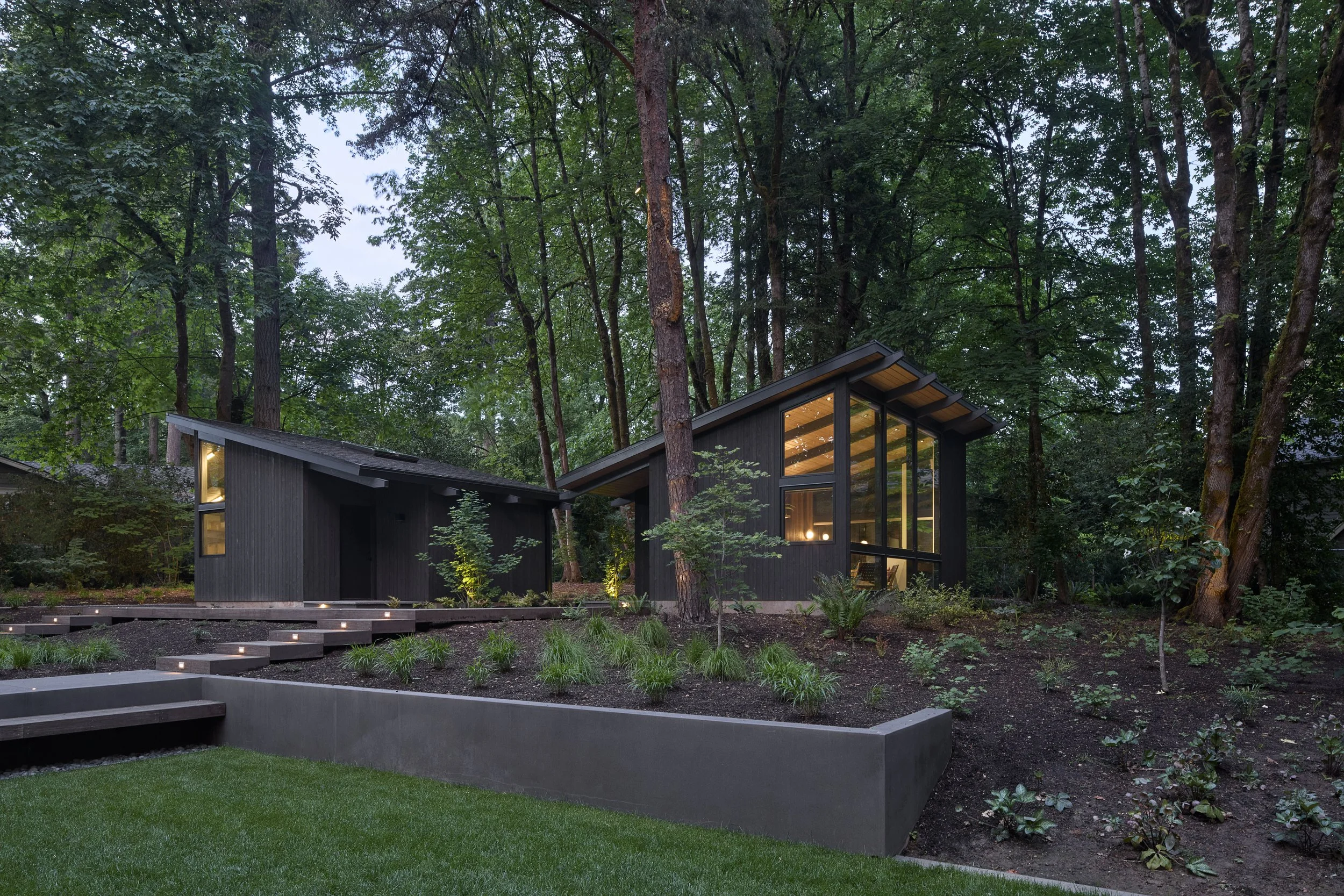
Originally built in the 1950s, the Glen Road residence sits on a large, wooded lot in Portland. We approached its full remodel with deep respect for its mid-century origins. The home was opened up dramatically: walls removed, ceilings raised, and light welcomed in through skylights and expansive glazing. A 25-foot pocketing sliding door now creates a seamless connection between the interior and a new covered patio with a brick fireplace—an echo of classic Northwest modernist hearth design.
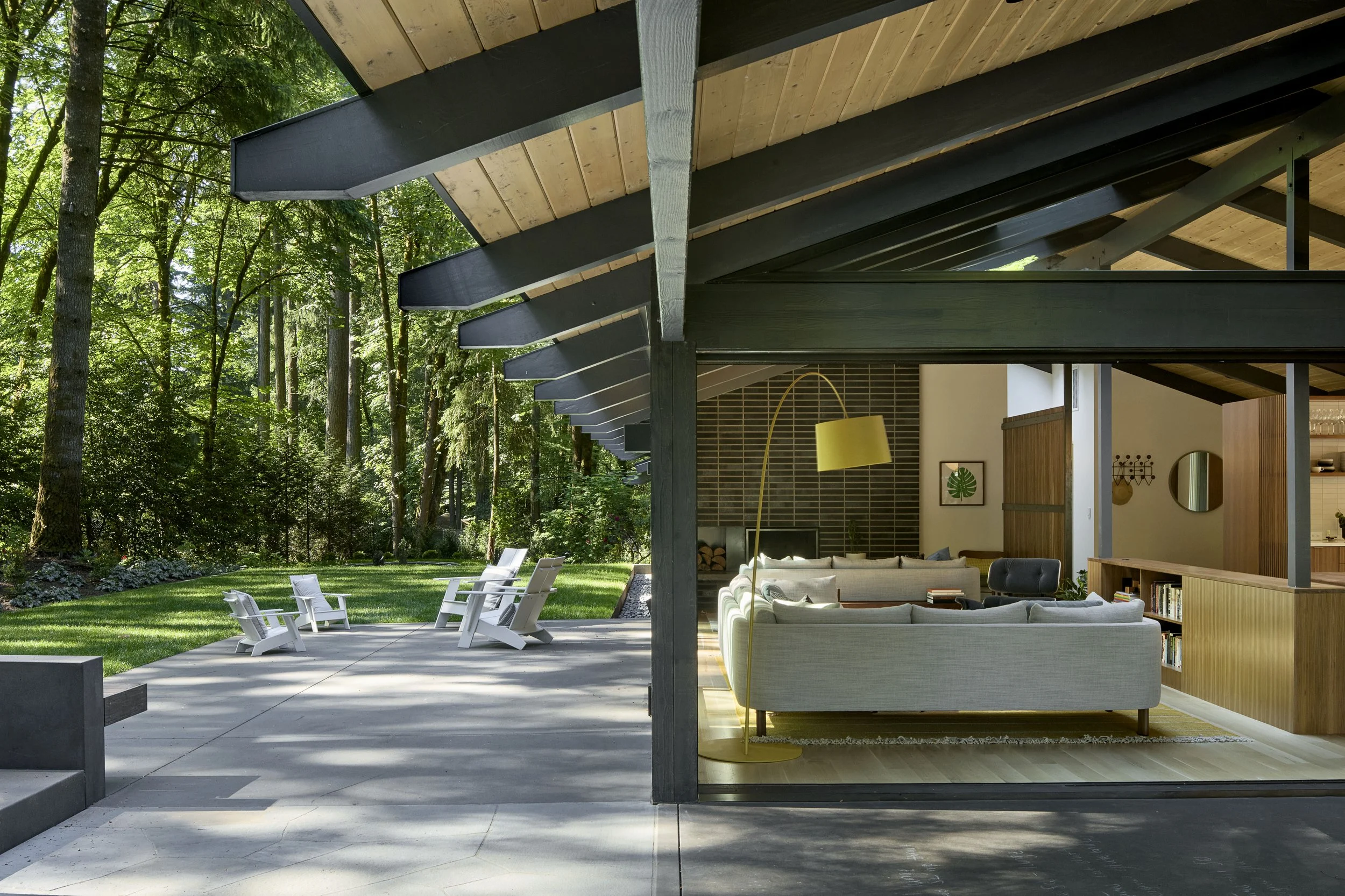
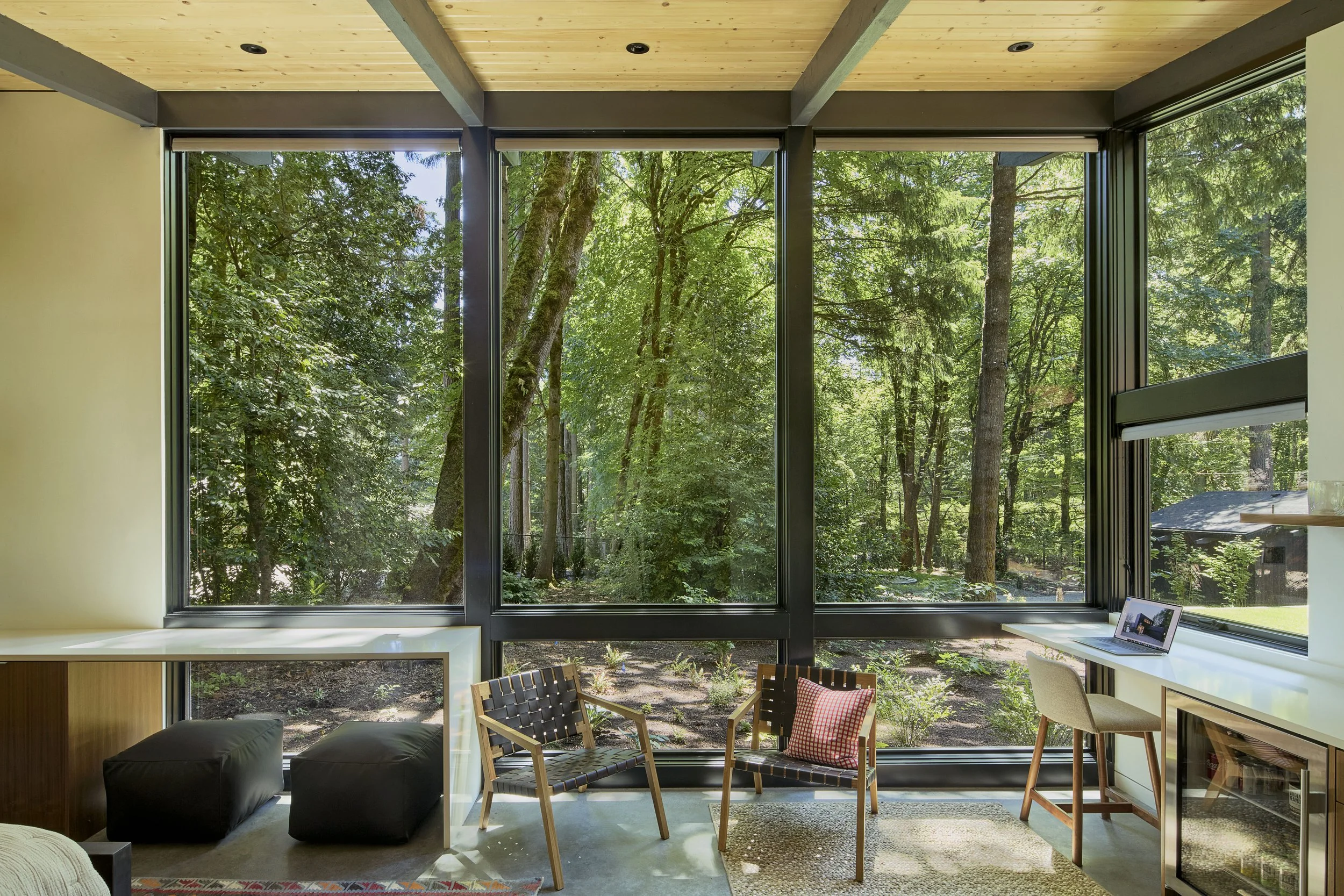
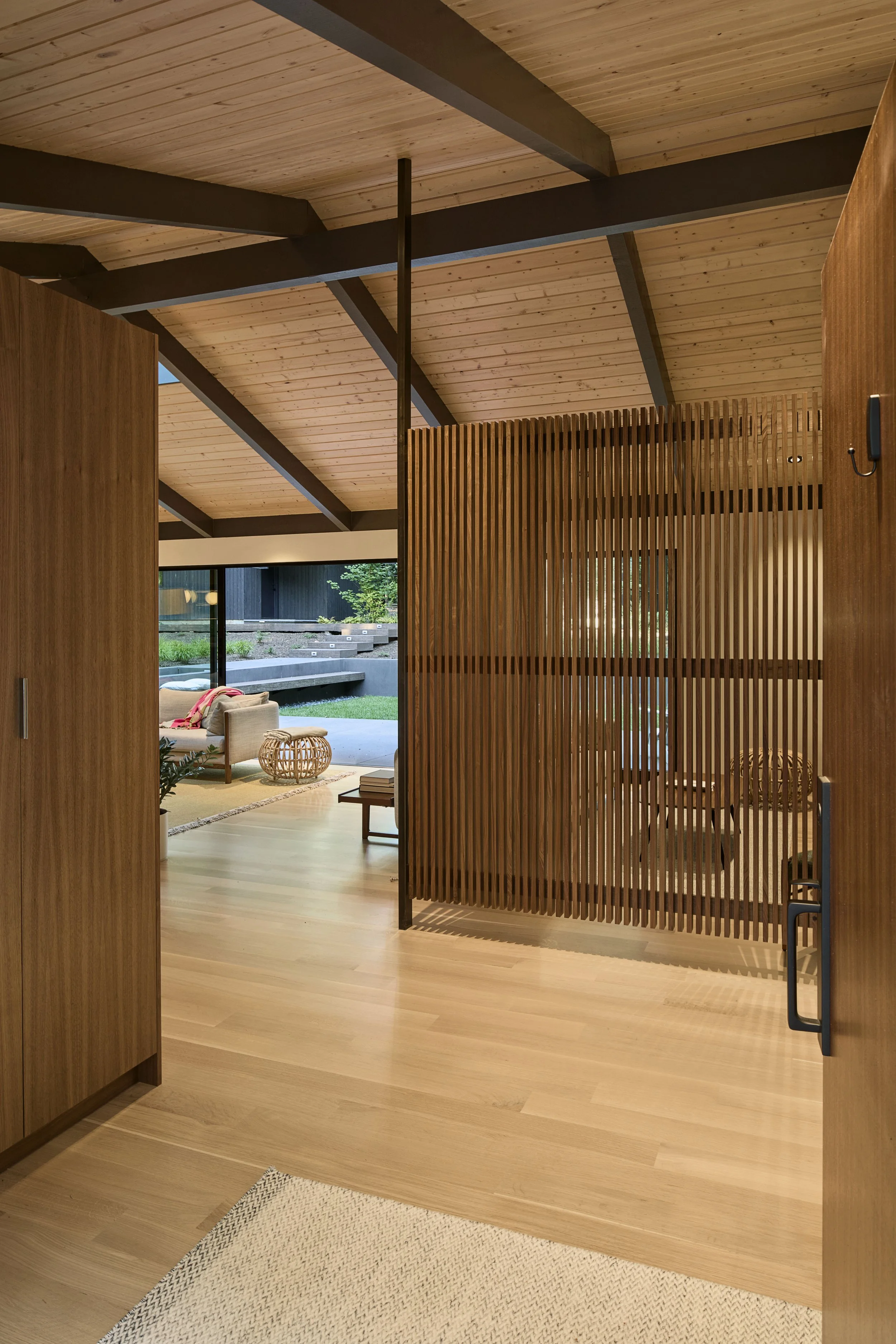
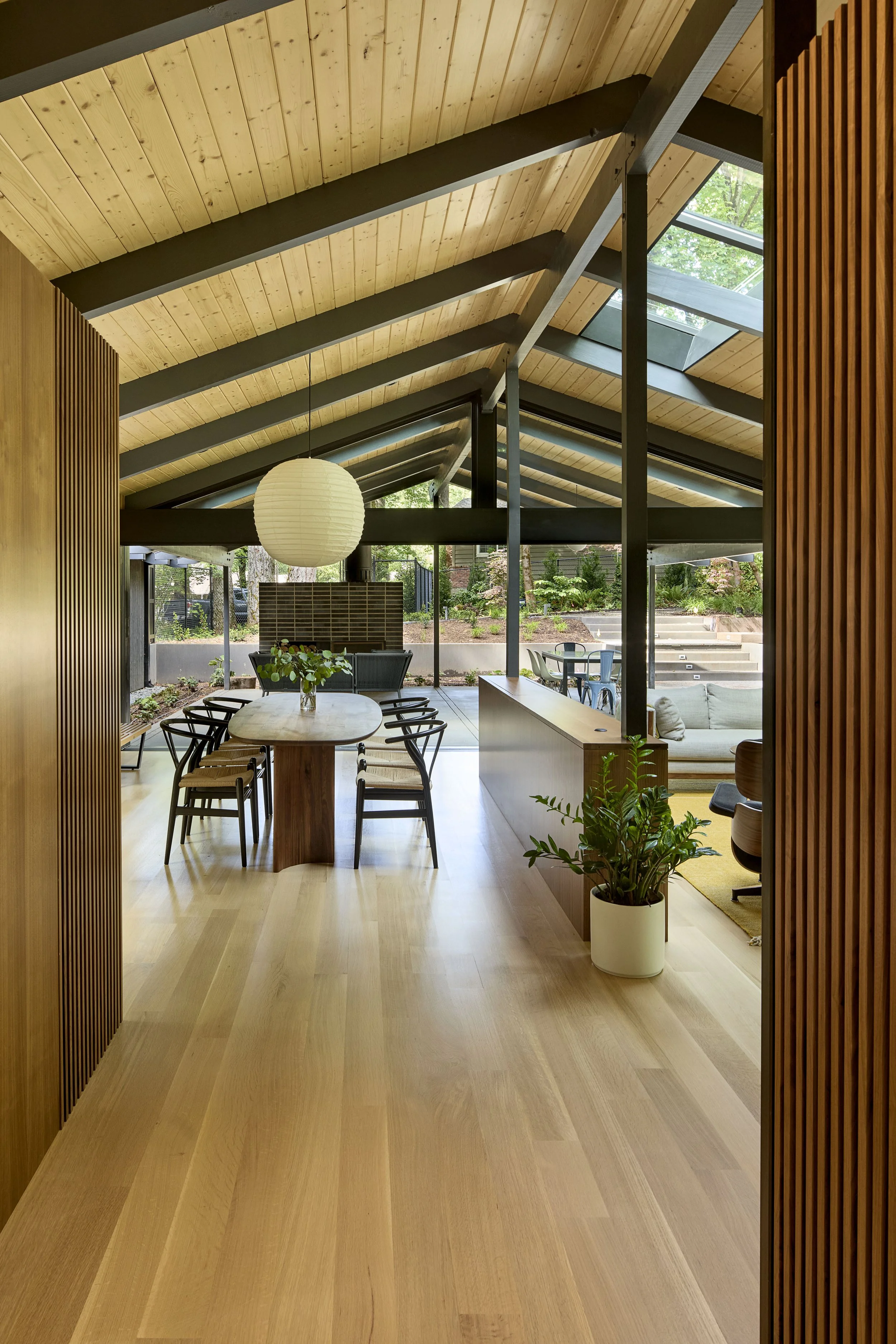
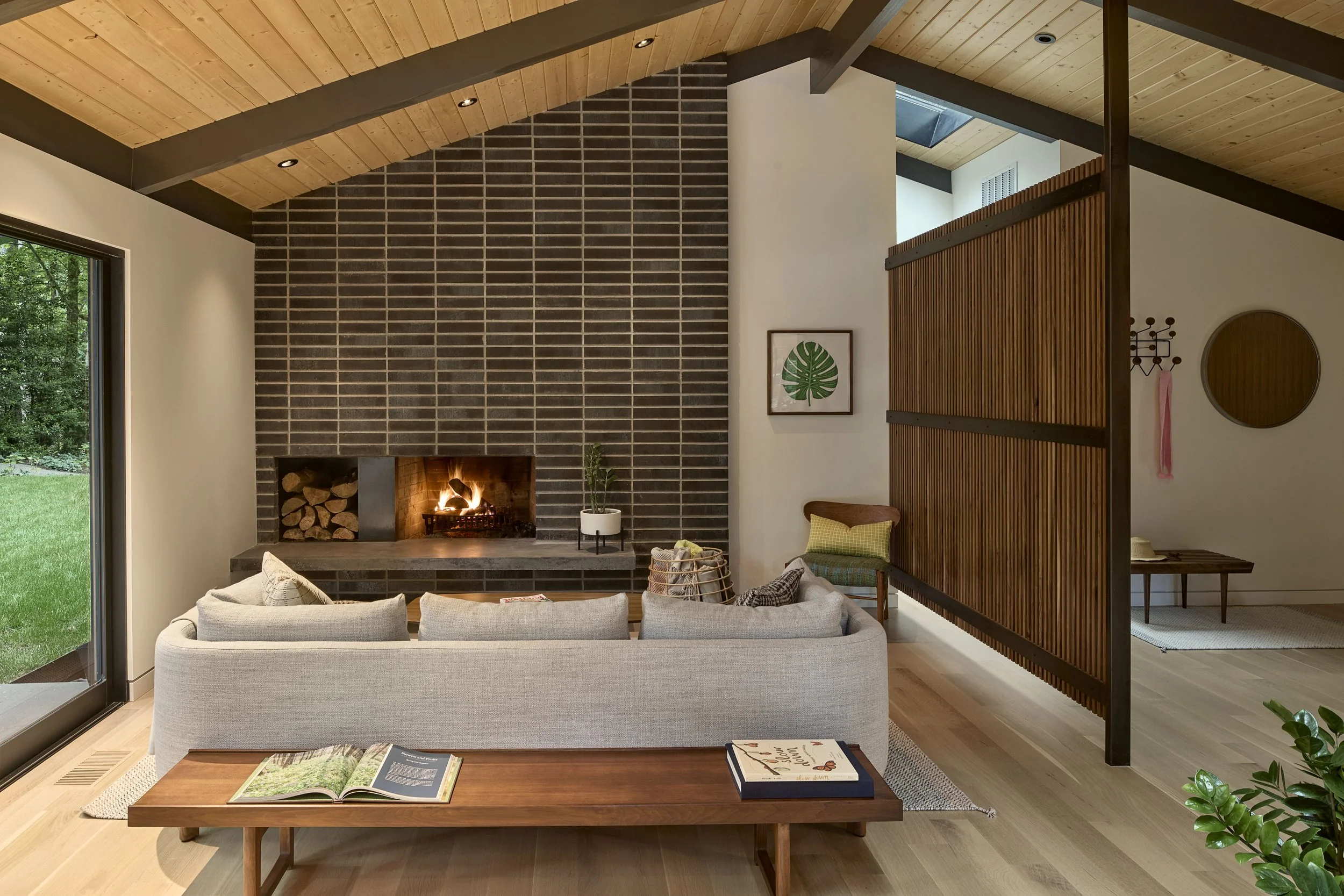
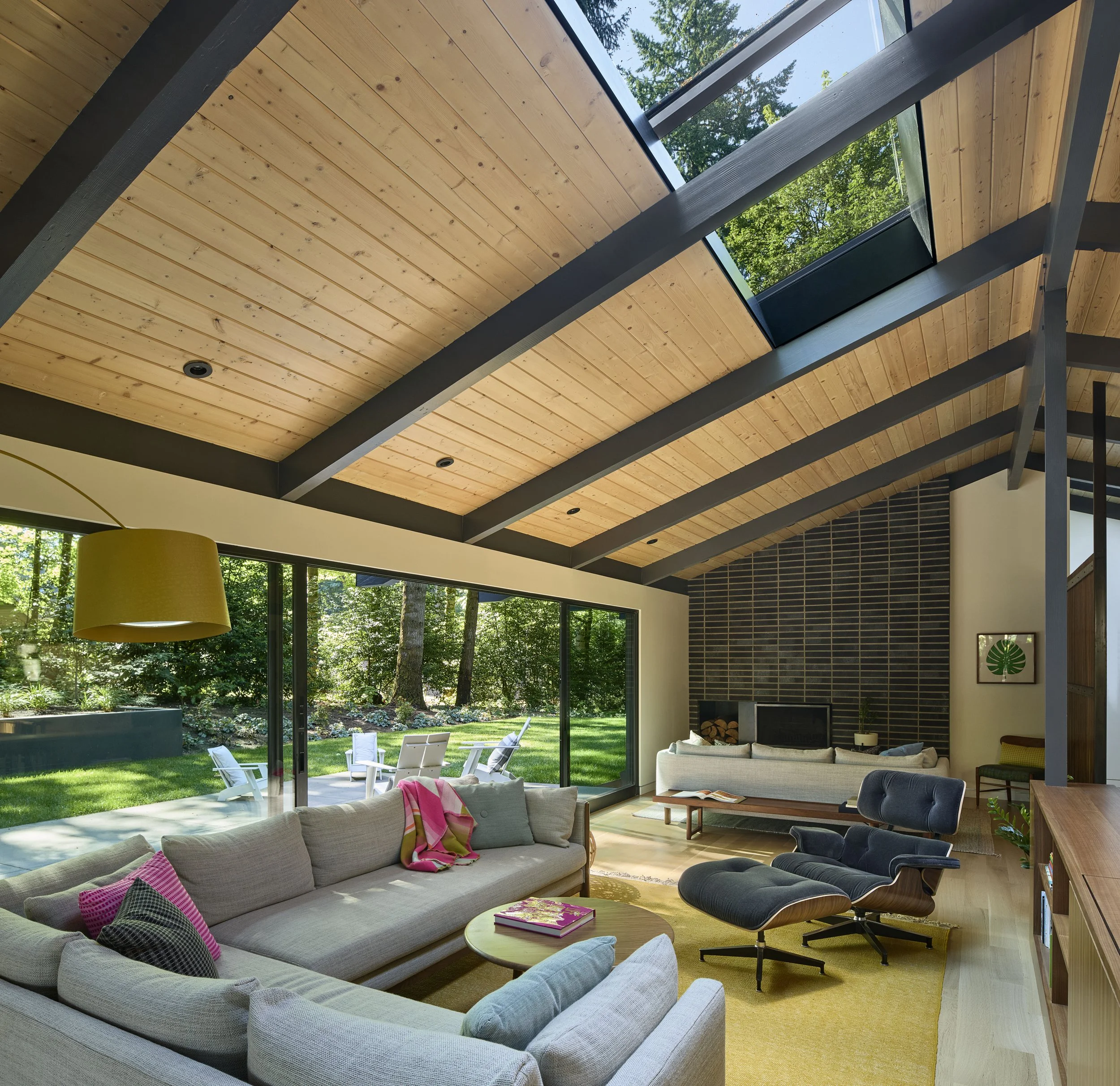
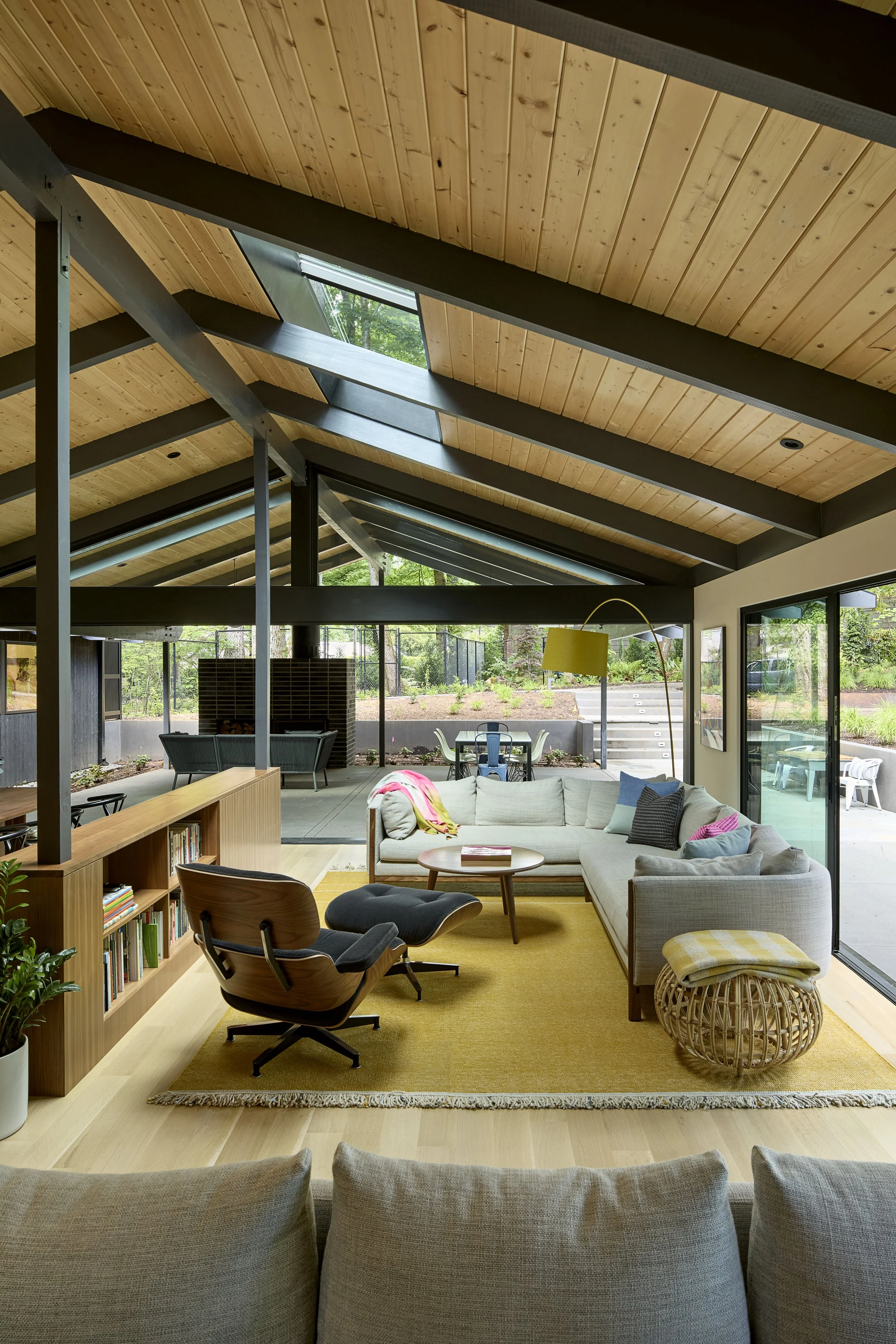
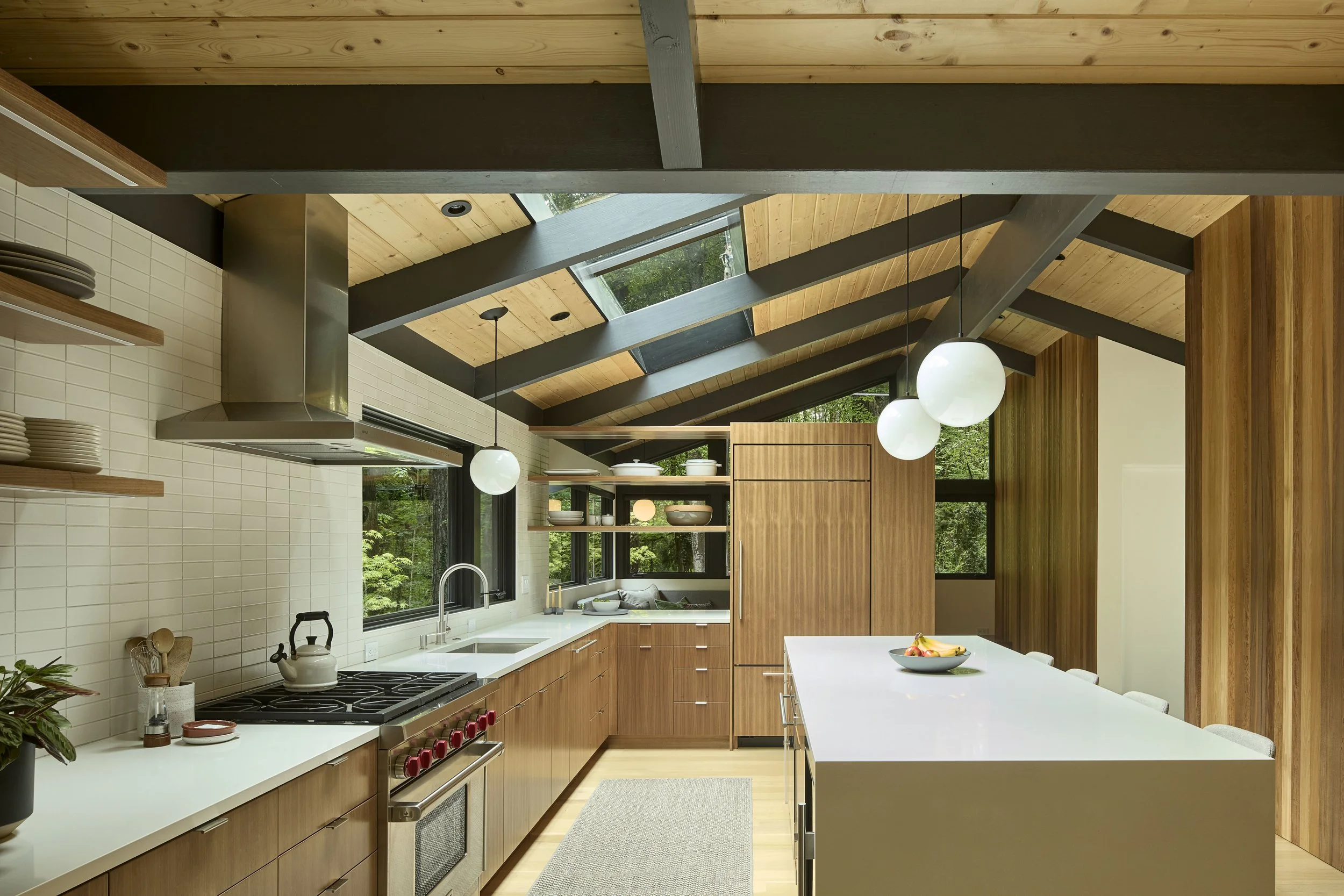
The project retained warm, natural materials and horizontal rooflines while integrating modern systems, insulation, and custom cabinetry. These upgrades reflect what many Portland homeowners hope to achieve: a house that honors its past while performing like a new build.
Sensitive Additions & Site Response
Rather than expand the footprint of the main house, two new outbuildings—a guest house and a workshop—were added beneath mature maple and pine trees. These structures complement the original architecture in scale and finish, demonstrating a preservation-forward mindset. The thoughtful siting and landscaping (by Lilyvilla Gardens) align with Portland’s long tradition of architectural humility and ecological respect.
What Glen Road Teaches Us
Honor the Framework: Retaining the structural logic, proportions, and material language of mid-century homes allows updates to feel authentic—not imposed.
Integrate, Don’t Imitate: Modern interventions like energy-efficient windows or heat pump technology can and should be incorporated subtly.
Expand With Care: When additional space is needed, consider detached structures that preserve the clarity of the original home.
Work with Experts: Collaborations like Glen Road’s—with Hammer & Hand, Lilyvilla Gardens, and Grummel Engineering—ensure the design vision is preserved from concept to execution.
Preservation with a Future
Glen Road’s transformation—recognized with two 2024 Gray awards for its kitchen—demonstrates that mid-century homes in Portland are not relics to be frozen in time. They’re living spaces that, when thoughtfully renovated, can accommodate modern lifestyles while retaining their architectural soul. In the hands of firms like Risa Boyer Architecture, this kind of work becomes a quiet act of stewardship—one that protects our region’s design heritage for generations to come.
Read more about Glen Road in Dwell Magazine and Residential Design.
Photography by Jeremy Bittermann. Project team: Risa Boyer Architecture, Hammer & Hand, Lilyvilla Gardens, Grummel Engineering.
Ready to start your mid-century renovation project?